He grew up in Philadelphia in a house with no religion, in a family that had come apart. He walked into a church at seventeen because of a girl he liked. He took a PhD from Harvard, taught church history for thirty years, spent forty years on one eighteenth-century theologian, lost most of the public fights he picked, and taught students who carried what he believed into the next generation. He died at home in 1996, in the middle of a circle of prayer.
Students called him scary. A colleague called him a fanatic. His own biographer opens the book by saying he will trace how Gerstner’s “militancy both helped and hurt his career”. The same biographer records a household that was rigid, isolated, and, in his words, “not perfect”. Other people, at the same time, describe him as delightful, phenomenally brilliant, kind, and the best teacher they ever had.
All of that is in here. It is not reconciled, because it does not reconcile. Both things are documented and both are true.
How to read this
Nearly everything here comes from one book: Jeffrey S. McDonald’s 2014 biography, written for a PhD at the University of Stirling. He interviewed about sixty people who knew him, including his son Jonathan, and worked through his papers. He never met John Gerstner, who died in 1996.
Every claim carries a page number, so you can check it. Every claim also carries a tag saying what kind of evidence it rests on:
DOCUMENTED In the biography, a letter, or his own published words.
ATTESTED A named person said it on the record. Credited to that person, never to “everyone”.
RECOLLECTED Family memory. Whose memory, and when they said it.
UNRESOLVED Believed but unproven, or the sources disagree. Said out loud rather than quietly decided.
The tags say where something came from, not how true it is. A published book can be wrong; a relative’s memory can be exactly right. Family memory has already corrected an error in the published book once.
Start anywhere
Things worth typing into the search box:
The search box reaches the full text of all 330 pages of the biography plus every quotation in it separately, about sixteen hundred entries, including all the unflattering ones. If you want to know what he thought or what people said about him, type it.
Stories
Moments from the biography, grouped by kind. Titles and descriptions are signposts; everything in a quotation box is the book itself, word for word, with the page it sits on.
In his own words
About 240 quotations in the biography are attributed directly to him. All are searchable from the box at the top. These are a few worth reading first.
We dare never underestimate our sovereign God, or rely much on our own very limited vision.
Letter to Carl Bogue, 13 December 1993, three years before he died · p.2 · DOCUMENTED
I had no religious rearing.
On his childhood · p.28 · DOCUMENTED
Friendly with each other, but nothing intimate.
On his relationship with his own father · p.28 · DOCUMENTED
The Lord has been most gracious to me and has blessed me greatly in my family.
Letter to Edna, mid-1950s · p.79 · DOCUMENTED
I am grateful to my wife, who played father and mother to our three children so that I could give my undivided attention
p.96. The book closes his quotation there and continues, in its own words, “to research on Jonathan Edwards”. · DOCUMENTED
“I must give up my JET project”, Gerstner noted. He added: “The reason is that I cannot stand the pressure to do what I want to do as a scholar”.
1990, aged seventy-four, giving up the Edwards study he had worked toward for forty years. He changed his mind and finished it. The two quotations are separate in the book and the biographer’s connecting words are kept. · p.262 · DOCUMENTED
In the same 1990 letter he wrote that Edna might be right that he was “thinking too much of pecayune scholarship”, and that she believed the project was “unnecessarily depressing” him. DOCUMENTED p.262
His Life
A childhood with no religion in it
He was born in Tampa, Florida, on 22 November 1914, the only child of John Gerstner Sr., who had come from Darmstadt, Germany, at six years old, and Margie Wilson of Macon, Georgia. His father was working as a waiter when he was born. The family moved to Baltimore, then to Philadelphia. DOCUMENTED McDonald, p.27
I had no religious rearing.
John Gerstner on his own childhood · p.28 · DOCUMENTED
He said he had loving parents. The 1930 census shows his parents had divorced and that he and his father were lodgers in another family’s house. Of his father he said they were “friendly with each other, but nothing intimate”. His biographer sets those facts beside each other and does not resolve them, then writes: “Gerstner appears to have had a somewhat challenging childhood.” DOCUMENTED p.28
Worth holding on to as you read the rest of this site: the man who built a rigid, religiously strict household had himself grown up in a broken one with no religion in it at all.
He sold newspapers on a street corner for the Philadelphia Evening Bulletin, edited the school paper, bowled and debated, and in 1932 graduated eighth in a class of three hundred. DOCUMENTED pp.28–29
He came to church because of a girl
In high school he began seeing a young woman who belonged to Beverly Hills United Presbyterian Church, and started going with her to services and youth group. Those were his first experiences inside a church. Everything that followed came out of that. DOCUMENTED p.29
Edna
He met Edna Suckau while guest preaching in Middletown, Pennsylvania. She had turned up annoyed, because the regular pastor was not preaching. The pastor’s wife invited them both to lunch.
For Edna Suckau, it was not love at first sight.
p.50 · DOCUMENTED
They married on 7 September 1940 in Berne, Indiana. Her father performed the ceremony. The local paper called it “the scene of the season’s most interesting and outstanding wedding”. DOCUMENTED pp.51–52
Harvard, then thirty years in Pittsburgh
He took his PhD from Harvard in 1945, and chose the place deliberately for the opposition it would give him: “I went there because it was ultraliberal and academically competent.” From 1950 until he retired in 1980 he taught church history in Pittsburgh, for most of that time as the most conservative person on his faculty. DOCUMENTED pp.10, 55, 70
What he actually did
What he actually did, for people who have never heard of any of it.
One thing explains most of his career. He spent his whole life inside a large mainline church that was moving away from what he believed, while his real influence grew outside it. He taught for thirty years at a seminary whose faculty mostly disagreed with him.
Jonathan Edwards
Jonathan Edwards (1703–1758) was the great colonial American theologian. Gerstner spent forty years on him and is still best known for it. He entered a field revived mostly by secular scholars, as the one who thought Edwards was not merely important but right. That is also what got him removed from the Yale project: he was, in the words of the man who replaced him, “always the proponent of Edwards” where a more critical approach was wanted. DOCUMENTED pp.1, 77, 179
The Bible fight
In the 1970s American evangelicals fought over whether the Bible contains any errors at all. He was a leading combatant and his work fed into the 1978 Chicago Statement on Biblical Inerrancy, still the reference document for that position. It is his clearest institutional win. The best scholars on the other side, Jack Rogers and Donald McKim, were both his former students. DOCUMENTED p.177
The fight he lost at home
In the 1960s his denomination replaced its centuries-old statement of belief. He fought it hard, called it “anything but sound”, and attacked it in print. In June 1967 it passed: only 18 of 184 presbyteries voted no. A colleague said almost the entire seminary faculty was against him. He lost roughly ten to one. DOCUMENTED pp.134, 141
R.C. Sproul and Ligonier
His student R.C. Sproul arrived holding one view of how to defend Christianity and left holding Gerstner’s. Sproul founded the Ligonier Valley Study Center in 1971; Gerstner joined as a lecturer in 1972. Ligonier became a large ministry and is the reason hundreds of hours of his voice still exist. His biographer calls Sproul “the person most responsible for continuing his legacy”. DOCUMENTED pp.144–145, 154
The scoreboard, in his biographer’s terms
He lost the Yale volume, lost the Confession of 1967, lost an ordination case he argued through the church courts, lost the argument with a rival school of thought, failed across thirty-two years to change his denomination and finally left it in 1990, and was judged by Edwards specialists to be an inaccurate reader of Edwards.
He won the Chicago Statement, he taught the students who built the institutions, and through Sproul his voice is still in circulation thirty years after his death.
The great work
The thread that ran through forty years of it, and the one he never finished to his own satisfaction.
He spent forty years trying to write one book, and for more than twenty of them he also held the editorship that would be taken away from him in 1977. At seventy-four he announced he could not finish. Then he published it anyway, in three volumes, and the reviews were merciless. This is the spine of his working life and the sources tell all of it.
1956: He names the job nobody has done
Reviewing another scholar’s book on Edwards for the New England Quarterly, he ended with a remark that turned out to be a life sentence. The book, he wrote, makes a “useful and essential contribution to the work that, as Dr Townsend himself observed, still needs to be written: an adequate statement of the philosophical system of the great New Englander”. DOCUMENTED pp.87–88
His biographer’s comment on that sentence: “It appears that perhaps Townsend first suggested to Gerstner’s mind that a serious study of Edwards’ philosophy needed to be written. Gerstner would spend the next several decades seeking to answer Townsend’s call.” He was forty-one.
1982: The Friends of the Gerstner Project
By his late sixties he had a circle of laypeople and colleagues funding and encouraging the work, and he had a name for them that says something about him. He “affectionately referred to this group of individuals as the ‘Friends of the Gerstner Project’”. DOCUMENTED p.216
In a November 1982 letter to them he listed what he was writing: primers on theology, a massive co-written apologetics book, a 400-page history of dispensationalism. And then, almost in passing, that he had not entirely neglected his work on “what should be my magnum opus, Jonathan Edwards’ Theology”. He thanked them for the “support, prayers, and encouragement” that had let him write “at least twice as fast and competently”. His former student Jim Dennison wrote back that he was happy to hear of his progress on the Edwards book, and that “It will be a joy to have it in print when complete”. DOCUMENTED pp.215–216
It would be nine more years.
1990: He gives up
He was seventy-four. Thirty-four years after he named the job, he wrote that he was “incapable or at least inadequate” to finish what he had started.
“I must give up my JET project”, Gerstner noted. He added: “The reason is that I cannot stand the pressure to do what I want to do as a scholar”.
p.262 · DOCUMENTED. The two quotations are separate in the book and its connecting words are kept.
In the same letter he reported his wife’s view of the problem, which was not the same as his. Edna thought he was “thinking too much of pecayune [sic] scholarship”, meaning he was lost in detail and making the work smaller than it should be, and she believed the project was “unnecessarily depressing” her husband. He added that putting the “work together in three volumes is much more than I can envisage”. DOCUMENTED p.262. The misspelling and the [sic] are the book’s.
His biographer’s whole comment on the passage is four words: “It was a painful admission.”
1991: He publishes it anyway
The Rational Biblical Theology of Jonathan Edwards began appearing in 1991, in three volumes running to more than 1,600 pages, edited by his former student David Coffin and funded and distributed by Ligonier. He had decided he could not do it and then he did it.
Volume one opened with a biographical introduction of Edwards that ran to fifteen pages. “Throughout his career Gerstner never seemed particularly interested in biographical details, choosing instead to concentrate on theology.” Volume two, in the biographer’s judgment, “was better organized”. Volume three covered evangelism, regeneration, justification, the church and heaven. DOCUMENTED pp.264, 267-268
The strength of it was real and it was a strength nobody else had. His analysis “is in many ways sui generis because his work was based on so many unpublished Edwards’ sermons”, and volume two carried a seventeen-page index of the particular Edwards works he had used. In the 1970s he had told Samuel Logan that “he thought he was probably the only person living” who had “read all the Miscellanies”. DOCUMENTEDATTESTED pp.267–268
1953 to 1977: The Yale volume, and the thing that ended it
Running underneath all of the above is the appointment that mattered most and the loss that shaped everything after it. This is the pivotal professional event of his life.
The Yale edition of the Works of Jonathan Edwards is the scholarly edition, the one every serious Edwards scholar uses. Gerstner was its editor for the volume of Edwards’s sermons. The book gives the start as 1953 in one place and “sometime prior to 1957” in another; either way he held it for over twenty years. DOCUMENTED pp.95, 179
It went wrong slowly. “Gerstner worked diligently to produce his edited volume of Edwards sermons, but repeatedly his introductions and proposals were rejected by the Works of Jonathan Edwards editorial committee.” That committee was not a minor body: Sydney Ahlstrom, Lyman Butterfield, Wilson Kimnach, Edmund Morgan, Norman Holmes Pearson, Paul Ramsey, Thomas Schaefer, and John Smith as chair. DOCUMENTED p.179
Wilson Kimnach, the literary scholar who assisted him for a few years and who would eventually replace him, gave two reasons. The first was temperament. Gerstner was “too explicit about being on the same wavelength as Edwards”, and “a more critical approach was required by the committee”.
Gerstner was always the proponent of Edwards
Wilson Kimnach, interviewed 10 December 2010, p.179 · ATTESTED
The second reason was technical, and it is the one that gets remembered in the family. In Kimnach’s account, “Gerstner was having problems accurately transcribing Edwards’ handwriting in order to produce quality texts of his sermons”. ATTESTED pp.179–180
Edwards’s manuscripts are notoriously difficult, written in a cramped eighteenth-century hand on whatever paper he could get. Producing a reliable text of them is painstaking, unglamorous work, and it is the entire job. The committee decided he was not doing it accurately enough.
In 1977 they ended it. The book’s word is blunt: “the committee terminated Gerstner from his” position, and “replaced Gerstner with Kimnach as editor of the volume on Edwards’ sermons”. DOCUMENTED pp.179–180
What it did to him is recorded by his son.
Gerstner’s son Jonathan remembers that this was an “extremely painful” experience for his father.
p.180 · ATTESTED · Jonathan Gerstner, interviewed 10 September 2012
His biographer says that “The sting of mainstream scholarly rejection lingered in Ladd and Gerstner for the rest of their lives”, and that “Gerstner’s embarrassment over losing his editorial position seems to have fuelled his subsequent scholarship and inerrancy campaign”. Writing outside the book, McDonald put it harder still: “he never recovered from the harm this did to his professional reputation.” DOCUMENTED p.180; and The Gospel Coalition
He was still talking about it two weeks before he died, telling a Kansas pastor that they “needed to pray for the Yale Edwards scholarship” because “the Yale scholars did not believe in Edwards’ theology”. ATTESTED Darryl McNabb, interviewed 26 July 2011, p.272
And fourteen years after the termination, when a reviewer checked the quotations in his dispensationalism book against their sources and found “multiplied examples where words in Gerstner’s quotation were different from the source quoted”, his biographer connected the two himself: “This complaint corresponds to the concerns cited decades earlier by the Yale committee on Edwards’ works.” Twice in a career, on unrelated projects, independent scholars examined how he reproduced other people’s words and found the same fault. DOCUMENTED p.261
The man who replaced him is also the man who gave him the fairest thing anyone said: there was “no one more passionate about Edwards than Gerstner”, who was “an apostle of Jonathan Edwards”. ATTESTED p.181
Harvard turned down his first idea
One earlier rebuff, much smaller, and worth having. As a doctoral student he first approached Henry Joel Cadbury, the New Testament scholar, about a dissertation on how form criticism demonstrates the reliability of the gospels. “Cadbury was happy to undertake the project with Gerstner, but told him that the rest of the faculty would not be too keen on passing the project.” DOCUMENTED pp.61–62
“Upon being rebuffed, Gerstner then ’moved over to the area I really preferred’, which was philosophy”, found Ralph Barton Perry outside the Divinity School to supervise him, and said afterwards that the two “worked well together”. He got the doctorate in June 1945. DOCUMENTED pp.61–62, 64
The reviews
One was warm. Michael McMullen, in the Evangelical Quarterly, found “much that is new”, especially the “substantial amount of unpublished manuscript material from the Edwards collection”, and said the work would be “appreciated by those who have been involved in...painstaking” research on Edwards. DOCUMENTED pp.268–269
One was cool. M.X. Lesser, an Edwards scholar, wrote in 1993 that it is “more an encyclopedia of Edwards’s thought than a coherent narrative of it, and so, for all its thoroughness, a work of rather limited usefulness”. DOCUMENTED p.269
And one was a demolition. Charles Hambrick-Stowe, in Fides et Historia, called an argument of Gerstner’s “absurd” and went on:
missing in the cranky lucubration is any glimpse of Edwards the evangelist of the Great Awakening
p.269 · DOCUMENTED
He described the work as “a rambling project never brought under control” and “full of typographical errors and grammatical idiosyncrasies”, and, in the biographer’s summary, what was perhaps most alarming was “the adulatory tone of Gerstner’s prose” which “conveys the impression of hagiography”. His biographer’s verdict on the review: “It was a stinging review.” DOCUMENTED p.269
Then something worse than a bad review happened. Nothing. “Because RBTJE was not recognized in academia as a scholarly work it was not widely reviewed. Perhaps Hambrick-Stowe’s criticisms so marginalised the study in the minds of scholars that no one else reviewed the three-volume work.” DOCUMENTED p.269
The same pattern, twice more, in the same six years
The Edwards volumes were not an isolated case. In the last six years of his life he published two other books and both were received the same way.
Repent or Perish (1990), on the doctrine of hell, written at the request of his friend John White, then president of the National Association of Evangelicals, to answer John Stott. He gave sixty pages to demolishing one opponent, Edward Fudge. He knew what he was doing. Of the book he wrote, “I know this is a hard book”, but he would not “shrink from declaring the whole counsel of God”. A reviewer said he came to the debate with “pistols flaring”. DOCUMENTED pp.256–259
Wrongly Dividing the Word of Truth (1991), 275 pages against dispensationalism, the theology of the Bible school where he had been converted. The reviews were, in his biographer’s word, scathing. John Witmer of Dallas Seminary called it a “diatribe”, “extreme” in its “false stereotypes”, and Gerstner’s manner “antagonistic, confrontational, denunciatory, and polemic”. DOCUMENTED pp.259–261
Witmer also found something harder to wave away. Checking the book’s quotations against their sources, he reported “multiplied examples where words in Gerstner’s quotation were different from the source quoted”. The biographer draws the line himself: “This complaint corresponds to the concerns cited decades earlier by the Yale committee on Edwards’ works.” DOCUMENTED p.261
Two independent sets of scholars, fourteen years apart, examined his handling of other people’s words and found the same fault. That is the single most serious professional criticism in the whole biography, and it is worth saying plainly in an archive that is itself built on quoting him accurately.
He did not accept it. In a second edition he answered his critics, called the historical errors “petty matters” and said Witmer should be “ashamed” of his language. DOCUMENTED p.262
What it came to
His biographer’s assessment, given twice and in full:
Gerstner’s study of Edwards’ theology was in various ways flawed. The three-volume series which began in 1991 was an accomplishment marred by Gerstner’s own idiosyncratic interpretation of Edwards and the problems associated with its production... And yet it must be recognized that RBTJE remains a valuable resource for Edwards’ students simply because it reveals a massive analysis of Edwards’ own writings.
p.276 · DOCUMENTED
In short, his passion for Edwards caused him to be unable to step back and offer a more critical evaluation. His own personal theological agreement and intense love for Edwards clouded his academic work.
pp.291–292 · DOCUMENTED
That is the thing that made him worth reading and the thing that ruined the book, and they are the same thing.
The part nobody expected
In 2010, nineteen years after volume one and fourteen years after his death, a theologian named Gary Crampton published a 470-page book whose only subject is Gerstner’s three volumes. It “closely examines each chapter in Gerstner’s three-volume work and distils Gerstner’s arguments”. Somebody thought the unreadable book was worth explaining at length to people who would otherwise never get through it. DOCUMENTED pp.270–271
Reviewing Crampton, the historian Douglas Sweeney added a line that reads like an epitaph for the whole forty years: “Younger readers may need to know that Gerstner played a major role in fueling the Edwards renaissance and making its scholarly fruit accessible to evangelical Christians”, and that he “promoted Edwards’ writings with hundreds of pastors, seminarians, and evangelical laity”. DOCUMENTED p.271
Kenneth Minkema of Yale, who says the work is “not very accurate”, also says he “looks at Gerstner’s work and uses it”, that it contains “very impressive good points of biblical exposition and commentary” found nowhere else, and that Gerstner was responsible for “getting lots of people interested in Edwards”. ATTESTED pp.269–270
He failed at the book. He did not fail at the thing the book was for.
The last years
He had triple-bypass surgery in the early 1990s and refused to let it slow his speaking. In his late seventies a student remembered him working calculus problems for fun. DOCUMENTED pp.254, 257
Two weeks before he died he flew to Waverly, Kansas, with his son Jonathan to lecture on Edwards. They lectured together, and the pastor there remembered his congregation saying “these guys are good!” ATTESTED Darryl McNabb, 26 July 2011, p.272
A week before he died, Geneva College gave him an honorary doctorate, presented by its president John White, who had been a freshman in 1954 at a Gerstner lecture series and said afterward that his “life was changed” by it. DOCUMENTED pp.83, 273
Gerstner died peacefully, while in a circle of prayer, at his home on 24 March 1996.
p.273 · DOCUMENTED
He died of pancreatic cancer, diagnosed the summer before. He is buried at Deer Creek Cemetery in Cheswick, Pennsylvania. Edna died in 1999. DOCUMENTED The biography gives the cause: his doctor told him in the summer of 1995 that he had pancreatic cancer (p.271). The burial place comes from Find a Grave, which is contributed by members of the public rather than compiled officially, so that part alone is unconfirmed.
The Family
Everything the biography records about the house rather than the career, warm and difficult together, in the order it appears in the book.
Who was in it
Edna Suckau Gerstner (1914–1999) spent part of her childhood in India, where her parents were missionaries from 1909 to 1920. Her father became pastor of the largest Mennonite church in the United States and founded a Bible institute in Omaha. She graduated from Wheaton College with High Honor in 1934 and took a master’s in literature from the University of Pennsylvania. DOCUMENTED pp.50–51
She was also a published author, which the 330-page biography never once mentions. She wrote at least four books, including Jonathan and Sarah: An Uncommon Union, about the marriage of Jonathan and Sarah Edwards, written while married to the foremost evangelical scholar of Jonathan Edwards; Idelette, a novel about John Calvin’s wife; and Conduct for the Crayon Crowd, stories she originally wrote for her own daughter, still in print today. DOCUMENTED Publishers’ listings, checked August 2026
Judy came to the family in 1951, aged eight, from the mountains of Appalachia, as a foster daughter. The arrangement became long-term. She appears in the biography three times in total and never as a person with a view of her own. Her surname is never given, and she is not among the roughly sixty people the biographer interviewed. DOCUMENTED pp.78, 146
Rachel was born in 1953. DOCUMENTED p.78
Jonathan Neil was born in 1957. DOCUMENTED p.96. The book’s conclusion says 1960 on p.280, which is an error; the family confirms 1957.
The house
Eight acres in rural Westmoreland County, Pennsylvania, ten miles from Ligonier.
The home’s location made it feel like we grew up on an island.
Jonathan Gerstner, interviewed 10 September 2012, p.147 · ATTESTED
The biographer uses that isolation as a metaphor for Gerstner’s loneliness among his colleagues at the seminary, and then moves on. What it was like for the three children growing up there is never asked.
The good days, documented
Nearly every summer the family went to Ocean City, New Jersey. He took his son to Pittsburgh Pirates games; Jonathan remembers watching Roberto Clemente and Hank Aaron with his father. The family dog was an enormous harlequin Great Dane with a very loud bark. He loved animals, opposed killing them for sport, and would not join the hunting that everyone around them did. Edna ran Bible studies, sat on a Pittsburgh hospital board, and belonged to the Ligonier township poetry society. DOCUMENTED p.118
In April 1956 Edna wrote to her mother that “We are all well and happy”, and that she would “rest easier” once her daughter had the new Salk polio vaccine. Three-year-old Rachel, she reported, talked “a great deal about going to Omaha”. Around the same time he wrote to Edna: “The Lord has been most gracious to me and has blessed me greatly in my family.” DOCUMENTED p.79
The rules
They held family devotions every day with all three children. Scripture was read, then discussed. Jonathan’s memory is exact: “some of these devotions lasted a few minutes, and others lasted for hours”. ATTESTED p.119
They kept the sabbath strictly: no sporting events, no television, no restaurants on Sundays. Worship, a large meal, then devotions again. As a boy Jonathan loved his parents and found the strictness “not always easy”. ATTESTED p.119
The biographer’s own summary of the household, in his own words:
John and Edna provided a loving family environment, but there was some discontent over their strictness. The rigidity in the Gerstner home paralleled Gerstner’s theological conservatism.
p.119 · DOCUMENTED
The passage the book does not follow up
This is the whole of what the biography says about the family coming under strain, quoted complete, with nothing left out:
At home, John and Edna faced the challenge of keeping a vibrant piety. The 1960s were a tumultuous period, and the Gerstners worried about how society was shaping their children. Tension grew within the family over clothing styles and the family’s lifestyle. Apparently, Edna was upset that her daughter Rachel was reading books that embraced the values of the counterculture. Rachel particularly struggled with her parents’ Christian child-rearing. Judy, however, was more compliant with her parents’ spiritual influence. The family home was on an eight-acre tract of land in rural Westmoreland County, Pennsylvania, and ten miles from Ligonier. Jonathan remembers that “the home’s location made it feel like we grew up on an island”. John and Edna loved their children, but their family life was not perfect. Gerstner’s home in the country provided Gerstner the opportunity to work in isolation, but it also serves as metaphor for Gestner’s loneliness on the PTS faculty.
pp.146–147 · DOCUMENTED. The misspelling of the surname in the last sentence is in the original.
Read that paragraph again and watch what it does. Six sentences of family difficulty, then the sentence “John and Edna loved their children, but their family life was not perfect”, and then the children’s experience turns into a metaphor for their father’s problems at work. The daughter who struggled gets two sentences in 330 pages, both of them about her mother’s disapproval of her reading. She is never quoted. She was never interviewed.
One sentence worth sitting with
I am grateful to my wife, who played father and mother to our three children so that I could give my undivided attention
John Gerstner, p.96. The book closes his quotation there and continues, in its own words, “to research on Jonathan Edwards”. · DOCUMENTED
He meant it as gratitude. It also describes a house in which one parent did both jobs so that the other could work undisturbed. Both readings are in the sentence. This archive does not choose between them.
What the book was never going to find
The biography was written with the cooperation of one son, who was also the keeper of the papers. That is the ordinary condition of a family-cooperative biography and the author is open about it, but it has consequences.
The household is seen almost entirely through Jonathan, who was born in 1957, was the youngest, and was roughly seven to twelve during the years the book identifies as the tense ones. He is a real witness to a real childhood. He is not a witness to his sisters’ childhoods, and he is the only one who was asked.
And every domestic passage in the book exists to explain something about the career. The isolated house explains his loneliness at work. The strict household “paralleled” his theology. The family tension appears in the conclusion as his uneasiness. The family is a lens on the man and never a subject. This book did not find out what happened in that house because it was never looking.
Three things it never touches at all. It does not ask what happened between 1968 and 1970, which is the emptiest stretch in its whole account of his adult life, and which is exactly when Rachel turned fifteen, sixteen and seventeen. It does not follow either daughter into adulthood; Judy and Rachel both simply stop appearing after the 1960s. And it never mentions that Edna wrote books.
His daughter Rachel published an account of her own life in 2021. It has its own page: Rachael’s Story.
Rachael’s Story
His daughter published an account of her own life. It has been on her professional website, under her own name, since February 2021. This page carries her words in excerpt and links to the whole of it.
This page is separate on purpose. It includes her own description of abuse in childhood and of the years of drug use that followed. Nothing on it is needed to follow any other page, so it can be skipped without missing anything the rest of the site depends on.
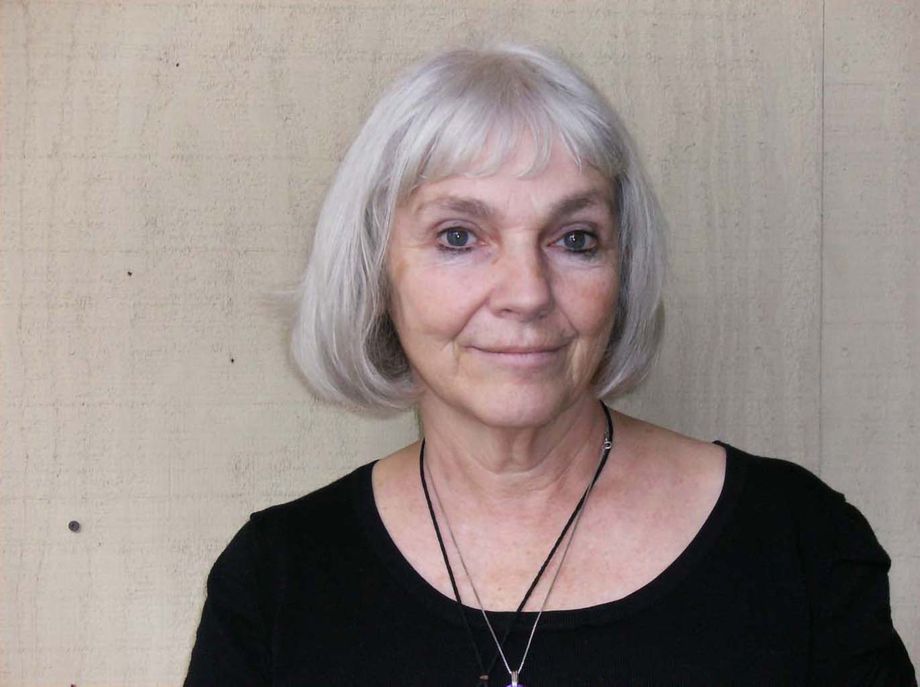
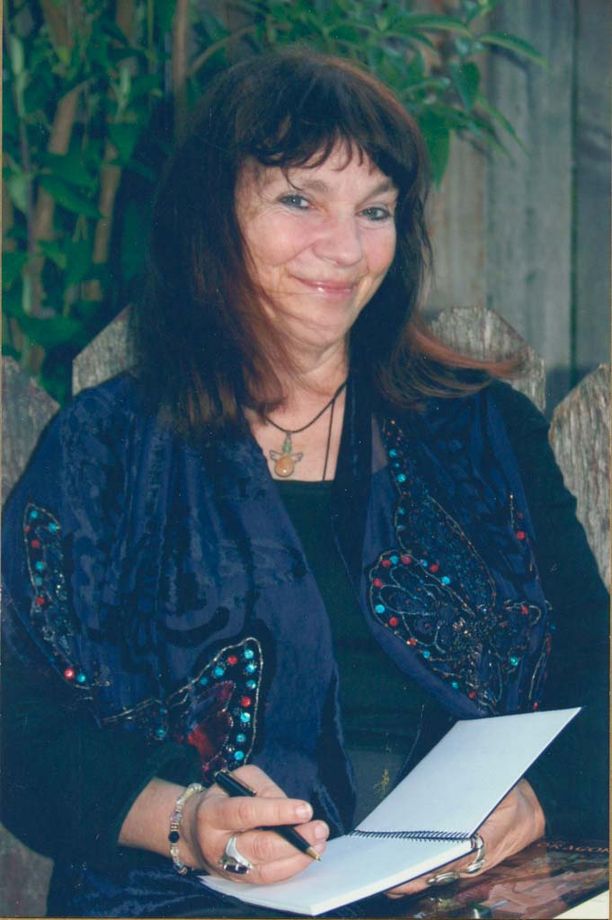
“Rachael now”, the portrait she uses on her practice site.Rachael Pruitt, from her own page
Who she is
John and Edna’s daughter Rachel, born 1953, is Rachael Pruitt. She is a novelist, a professional storyteller, a teacher, a drug and alcohol counsellor and a certified hypnotherapist. She keeps two public websites, one for her practice and one for her fiction. DOCUMENTEDvistasforchange.com and rachaelpruitt.com, read 6 August 2026
McDonald never interviewed her. She is not among the roughly sixty people he spoke to, and the biography quotes her not once in 330 pages. What follows is the other account of that household, written by someone who lived in it.
Her childhood, in her words
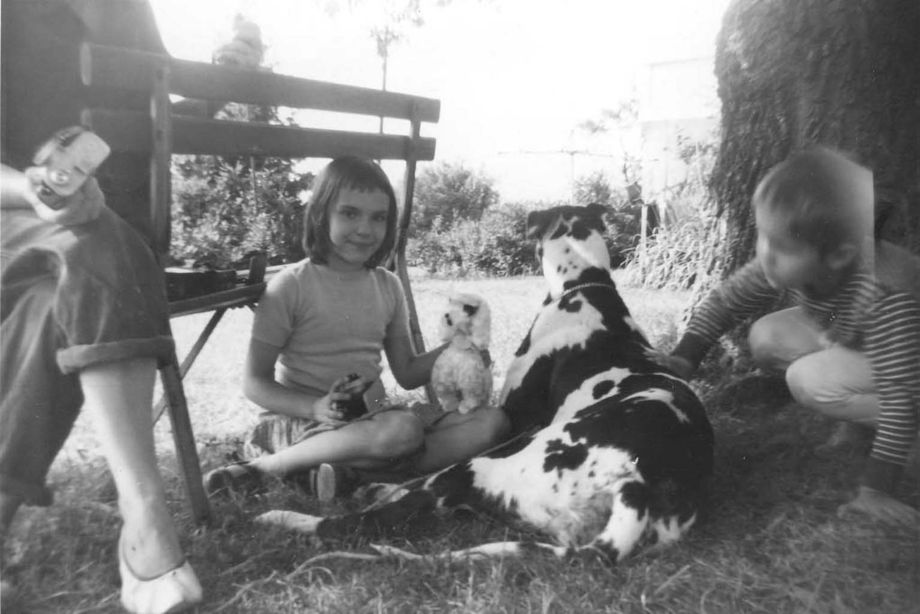
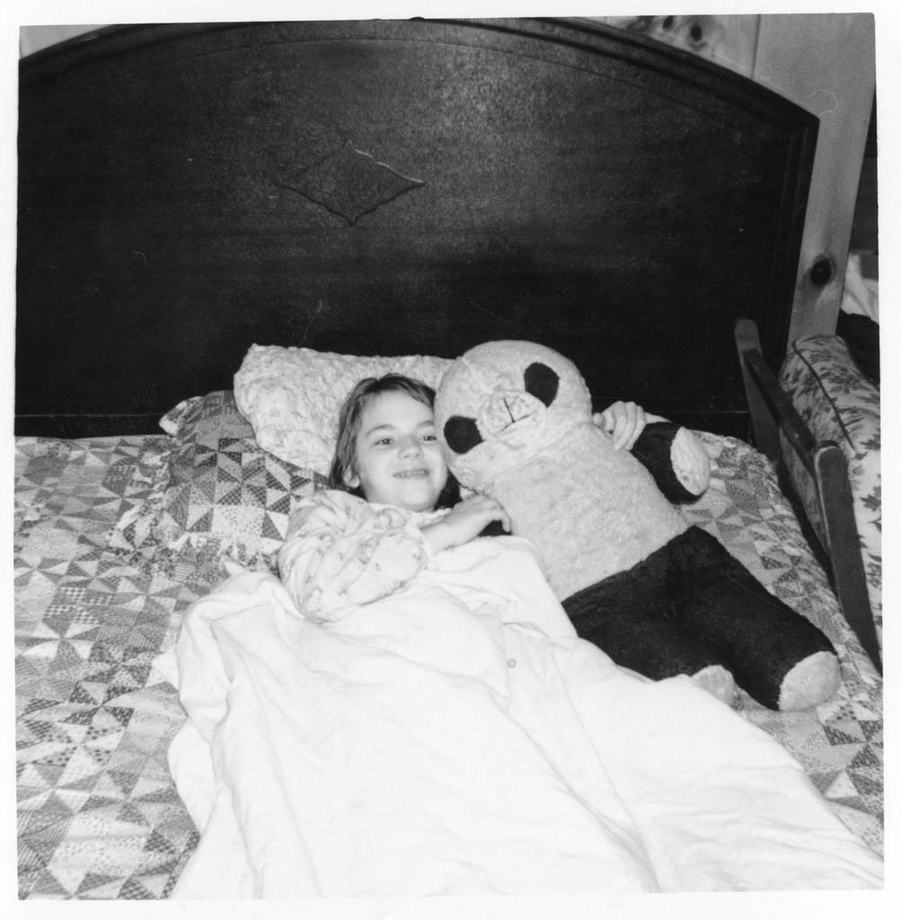
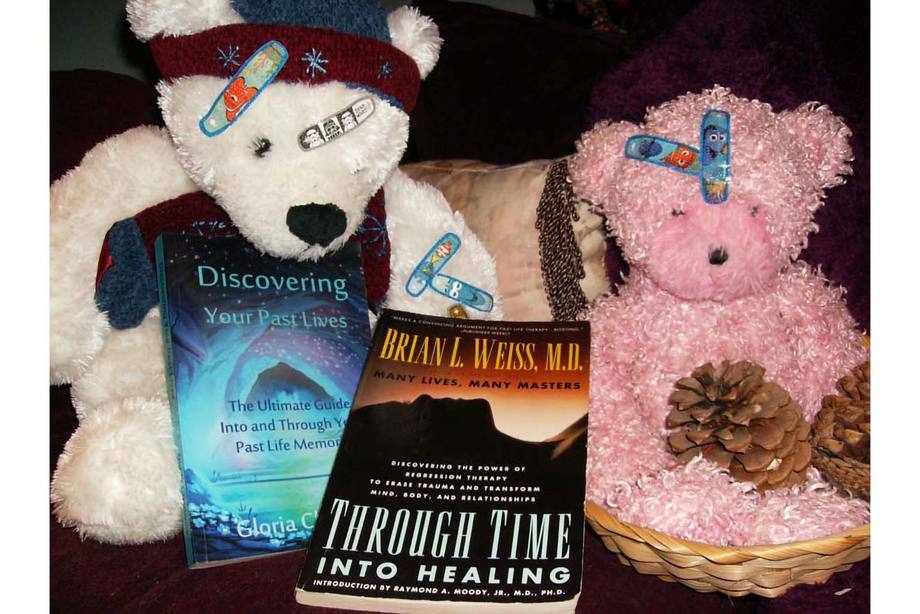
Ever since I was a little girl, I believed in creating a better world. Back then, my original allies were stuffed animals and one very long-suffering Great Dane. I took them all into my confidence, helped them when they seemed sad, took them on walks to remind them of the beauties of nature, and decorated their foreheads with multi-colored band aids to fix suspected injuries. (It was at this point that my Great Dane finally had enough and bolted for freedom!)
Growing up in the beautiful western Allegheny hill country of Pennsylvania, I remember walking barefoot in wet summer grass, reading the adventures of Tarzan beneath a blossoming dogwood tree.
Rachael Pruitt, My Story, published 22 February 2021 · ATTESTED
“Born to Dance—and Run!”Rachael Pruitt, from her own page“Dreaming of a better world”. Her own title for it is “Great Dane & me as a kid”.Rachael Pruitt, from her own page
Two details in that passage are also in the biography, which she has never been asked about and which was written from her brother’s memory and her father’s papers. The family dog was an enormous harlequin Great Dane with a very loud bark. The house sat on eight acres in rural Westmoreland County, ten miles from Ligonier, in exactly the hill country she describes. DOCUMENTED pp.118, 146–147
“Oh the places I dreamed of going...”Rachael Pruitt, from her own page
The part the biography has no version of
Sadly, there was also a dark side to my childhood. I was blessed to have my material needs taken care of but, like so many kids, I encountered abuse. Also, like most kids, I didn’t have anything to compare it to, so I simply lived through it all and survived.
During early adolescence, I experienced enough trauma to essentially destroy my innate self-esteem, leaving a “dark hole”, an inner emptiness, in my psyche.
Rachael Pruitt, My Story · ATTESTED
Leaving at sixteen
Over the next few years, as I matured, I began to learn about the civil rights movement and the emerging Vietnam War. I became a 60s activist and left home at 16.
Rachael Pruitt, My Story · ATTESTED
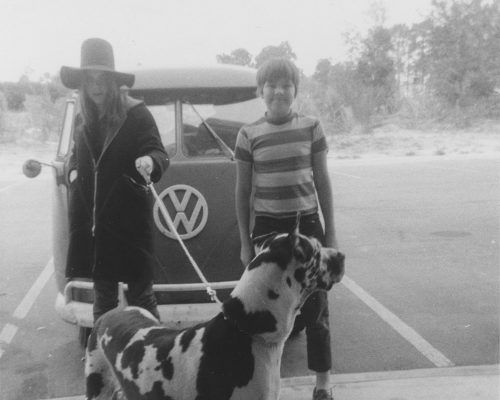
“60’s Activist with her Great Dane”. She titles it “Me, Mortimer & Arlo Guthrie Hat”.Rachael Pruitt, from her own page
She was born in 1953, so sixteen puts her leaving in 1969 or 1970. DOCUMENTED p.78 for the birth year, her own account for the age
Two things sit beside that date. The biography describes the same years in its own voice, from the parents’ side, in the only passage it gives to the family coming under strain: tension over clothing styles and the family’s lifestyle, Edna upset that her daughter was reading books that embraced the values of the counterculture, and Rachel struggling with her parents’ Christian child-rearing. Where the book records disapproved reading, she describes learning about civil rights and the war and acting on it. DOCUMENTED pp.146–147
And 1968 to 1970 is the emptiest stretch in the biography’s whole account of her father’s adult life, the three years for which it has least to say about him. Both facts are recorded here. This archive does not join them. UNRESOLVED Density analysis of the 530 dated sentences in the thesis, in the archive’s timeline file
The years after
Soon went off the deep end with drugs. Recovering from one of the most dangerous periods of my life– while still a teenager–I married, divorced, traveled across America and Europe, wrote poetry, and tried to ignore the “unmoored desperation” I still felt inside. It was a desperation that drove me to make more and more destructive choices.
Rachael Pruitt, My Story · ATTESTED
“Wishing on a Star...”Rachael Pruitt, from her own page“Getting Lost—and Staying Lost for Years”Rachael Pruitt, from her own page
The family she found
Living with my friend’s family, I discovered for the first time the uncomplicated warmth of a healthy family.
Experiencing an entirely new model of how a family could function, with love, warmth, humor, hard work, and honest communication gave me a life-long gift.
Rachael Pruitt, My Story · ATTESTED
“Mick and Frieda—the family of my heart.”Rachael Pruitt, from her own page
That is the sentence in her account that says the most while naming no one.
What she says saved her
What saved me was a blessed combination of tools that gradually emerged in my life as I continued to self-destruct; hellbent as a battered, dying moth determined to reach the fire that will doom her. First it was my rediscovery of writing—my personal creative process—that came to my rescue.
Rachael Pruitt, My Story · ATTESTED
“TRAPPED!”Rachael Pruitt, from her own page“First it was my rediscovery of writing—my personal creative process—that came to my rescue.”Rachael Pruitt, from her own page
Who she became
My name is Rachael Pruitt and I’m a writer, storyteller, and teacher with a lifelong fascination for Celtic mythology and the Arthurian legend.
My novel, The Dragon’s Harp, tells the story of the coming of age of the famous Queen Gwenhwyfar (the Welsh spelling for Guinevere) in a dark and frightening time.
“I rediscovered my childhood love of stories. For they too, I realized, were another way to experience beauty, to explore our human adventure and potential.”Rachael Pruitt, from her own page“Putting It All Together: Learning that It’s Safe to Trust Yourself”Rachael Pruitt, from her own page
The Dragon’s Harp: Era of Dragons, The Lost Tales of Gwenhwyfar was published in 2012. Her author site records two awards for it, the 2013 Visionary Fiction Award from the Coalition of Visionary Resources and the 2012 Global Ebook Award for Ancient Historical Literature. Before it she published Arthurian poetry in Paradox magazine in 2008 and 2009, and an essay in the 2011 anthology Many Genres, One Craft. She holds a master’s in education and a master’s in writing popular fiction. DOCUMENTED ISBN 9780985058814, and her author site, read 6 August 2026
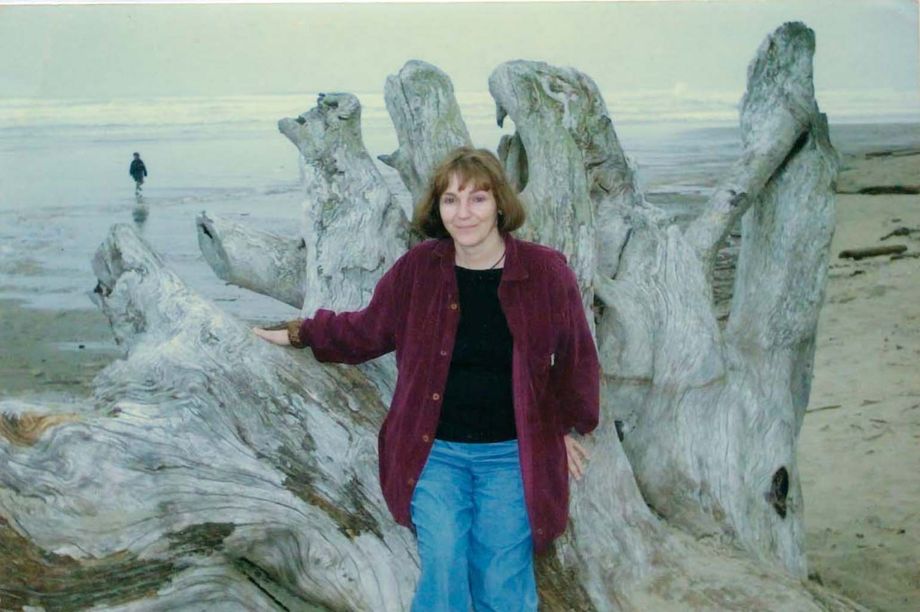
“YES, IT REALLY CAN HAPPEN FOR YOU”Rachael Pruitt, from her own pageWith driftwood, in Florence.Rachael Pruitt, from her own page
Two women in that house wrote books
Edna published at least four, including a novel about John Calvin’s wife and a book about the marriage of Jonathan and Sarah Edwards. Her daughter published a novel retelling the youth of Guinevere, and won two awards for it. The 330-page biography of the husband and father mentions neither woman’s writing anywhere in it. DOCUMENTED Publishers’ listings for both, checked August 2026
The photographs on this page
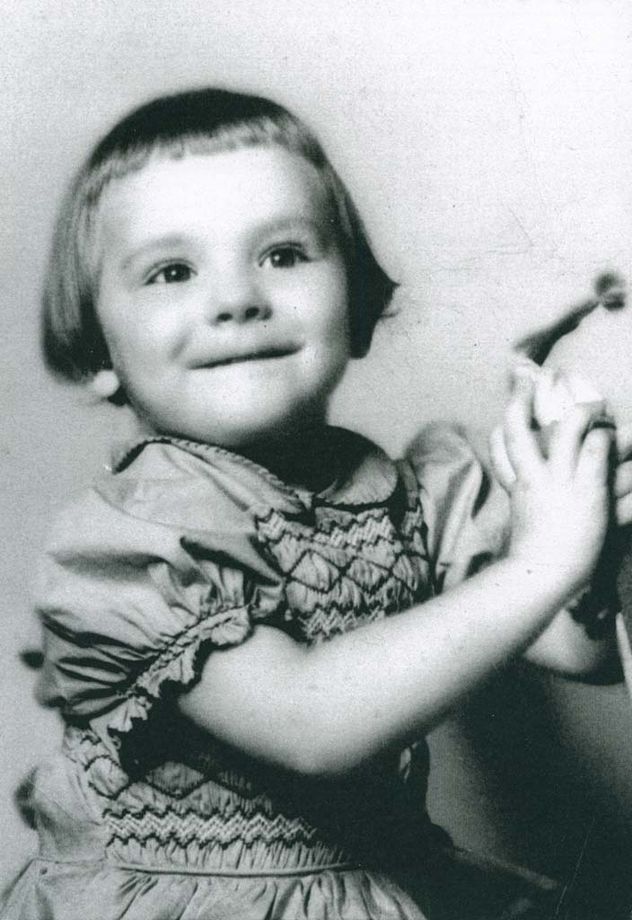
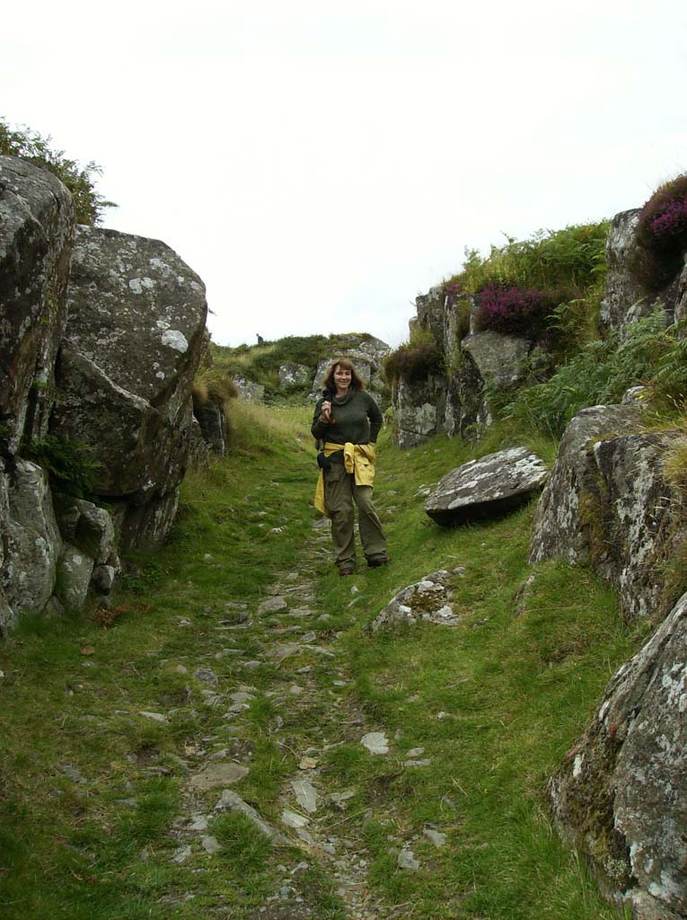
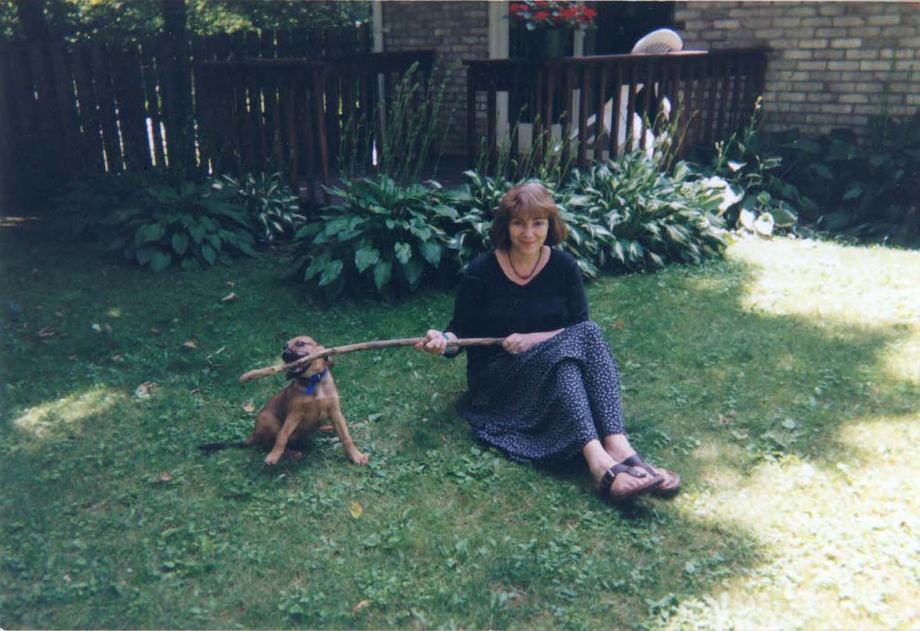
Every photograph above is hers, published on her own page, and each one carries the caption she gave it. They are here with credit and a link back rather than described from a distance, because her account is worth seeing the way she assembled it. Her page holds about twenty-five pictures in all, and these are the ones that carry the story.
She has not been asked. If she ever wants any of it taken down, that is the end of the matter and it comes down.
UNRESOLVED A possible name for the family dog. She titles the photograph from her activist years Me, Mortimer & Arlo Guthrie Hat, and captions it as a picture of her with her Great Dane. The natural reading is that Mortimer is the dog. That is an inference from a picture title rather than something she stated, so it is recorded as unproven. The biography never names the dog.
“Rachael then.”Rachael Pruitt, from her own page“YES, IT REALLY CAN HAPPEN FOR YOU”Rachael Pruitt, from her own page
What she does not say, stated precisely
She names no family member anywhere on either site. She does not name her father, or her mother. She does not say who the abuse came from, or what it was. She does not use the surname Gerstner. This archive therefore does not say any of those things on her behalf, and no future version of it should.
Nate’s note
RECOLLECTED Nate Gerstner, 6 August 2026. This is one family member’s belief, held from accounts heard within the family over the years rather than from his aunt directly. It is his statement, signed, and it is not something the sources above establish.
I believe my aunt was writing about her father, and that she left home primarily because of him. She was distant from the family for the rest of her life. My older sister remembers seeing her at our grandmother’s funeral, around 1999, and that was the last time anyone in the family saw her.
I built this archive because I would rather my children inherit the true version of their great-grandfather, including the parts nobody said out loud, than a comfortable one.
“REMEMBER, It’s Never Too Late To Have a Happy Childhood”Rachael Pruitt, from her own page
Read it yourself
The excerpts above are a fraction of what she wrote, chosen because they bear on the family record. Her account of how she rebuilt a life is longer than the part about how it broke, and the whole of it, with her photographs, is on her own page.
Her author site, rachaelpruitt.com, for the novel and the storytelling work
The Hard Record
Almost all of this comes from the biography itself, which was written with the family’s cooperation. None of it had to be dug up.
His biographer’s own framing
On page two, before any of the story starts, McDonald tells you what he is going to do:
Expressions of Gerstner’s resolution revealed both personal strengths and weaknesses and this thesis will identify the ways in which Gerstner’s militancy both helped and hurt his career and scholarly reputation.
p.2 · DOCUMENTED
Militancy is the biographer’s word, not a critic’s. And at the end:
He was not a great apologist nor was he a leading Edwards scholar in his era. Likewise, his forays into Presbyterian church politics reveals that he was not a successful mainline Presbyterian church politician.
pp.295–296 · DOCUMENTED
In the classroom
A student, early 1980s
John Hoop found Gerstner to be a “scary” and “intimidating” teacher, and said that “students would want to be prepared for Gerstner’s classes”. He also thought his “reasoning was very tight”. ATTESTED John Hoop, interviewed 16 September 2011, p.232
A student who became his friend
John Armstrong called him “a master teacher”. The same witness, in the same breath, also remembered that Gerstner “blew up in class” on one occasion and called a student a “stubborn Arminian”. ATTESTED John Armstrong, interviewed 29 December 2010, p.231
A student, mid-1970s
Very strident.
Andy Gerhardt, interviewed 5 January 2011, p.195. The same student added that he “kept evangelical students solid”. · ATTESTED
His own view of other ministers
Many young pastors were wimpy.
Gerstner’s opinion, remembered by his student Bruce Mawhiney, interviewed 13 October 2010, p.195 · ATTESTED
Among colleagues
A fellow professor, after hearing him preach in chapel
This man Gerstner is a fanatic.
H. Eberhard Von Waldow, an Old Testament professor at his own seminary, said to a student · p.142 · DOCUMENTED. McDonald adds: “some people found Gerstner’s theology and vigorous preaching style too severe.”
On a national committee
Gerstner was not the most vocal member, but he was one of the three most militant.
Jay Grimstead, who founded the committee, interviewed 6 November 2012, p.171 · ATTESTED
A reviewer of his book
Sproul, Gerstner and Lindsley certainly cannot be charged with ambivalence, but they frequently may be perceived by the reader as being arrogantly dogmatic.
George Zemek Jr., published review of Classical Apologetics, p.223. Zemek found the authors too critical of theologians they disagreed with. · DOCUMENTED
A church member who liked him
Dick Ghorum, an associate pastor, found him “quirky, but delightful” and “phenomenally brilliant”, and said he thrived in question-and-answer sessions. He also noted that Gerstner had a reputation for sometimes chiding a church member in group discussion. In the biographer’s summary of what Ghorum said, Gerstner “was not the most sensitive person, yet he found him to be caring” and “often had a rather brusque style”. ATTESTED Dick Ghorum, interviewed 6 July 2010, p.214
A friend
A very astute scholar, amenable, but also very opinionated.
Richard Todd, interviewed 9 February 2013, p.214 · ATTESTED
Outside the family, in published reviews of the biography: John Muether describes him as “alternatively gregarious and brusque” and says he “would often come across to strangers as strident and gruff”. The biography attributes part of the gruffness to severe asthma, which made him strain when he spoke. DOCUMENTED Ordained Servant, April 2018; Bob on Books, November 2022; and pp.3, 140
What he lost
For twenty years he was editor of the Yale edition’s volume of Jonathan Edwards’s sermons. The editorial committee repeatedly rejected his introductions and proposals. In 1977 they removed him. His son called it “extremely painful” for his father. His biographer says the sting “lingered”, and, writing outside the book, put it harder: “he never recovered from the harm this did to his professional reputation.” He was still bitter about it two weeks before he died. DOCUMENTEDATTESTED pp.179–180, 272
The scholar who replaced him said the problem was that Gerstner “was always the proponent of Edwards” where “a more critical approach was required”, and that he had trouble accurately transcribing Edwards’s handwriting. ATTESTED Wilson Kimnach, p.179
His three-volume masterwork was judged “at times incoherent and disorganized” by one reviewer, “poorly edited and flawed in many ways” by another, and its own editor said volume one was “the worst”. The director of Yale’s Edwards Center says it is “not very accurate”. DOCUMENTEDATTESTED pp.263, 269, and published reviews
At home
The household material is on the family page, in full. The short version is that the biography documents a strict, religiously rigid, physically isolated house; a daughter who “particularly struggled with her parents’ Christian child-rearing”; a son who found the strictness “not always easy”; and the biographer’s own summary sentence, “John and Edna loved their children, but their family life was not perfect.”
Where the documented record stops
This site will not tell you he was an abusive man, because no source available to it establishes that, and this archive does not print conclusions its sources cannot carry.
What the sources do establish, from named people, on the record, is a man who was frequently harsh, intimidating, combative, militant, brusque, insensitive and rigid, at work and at home, over decades. That is the documented record and it is not a small thing.
Beyond that line sits what family members believe and what one family member has published about her own life. Both are below, both are labelled, and neither is presented as something the sources prove.
Her own account
His daughter Rachel, born 1953, published an account of her own childhood in 2021, under the name Rachael Pruitt. It is her words, and it is long enough and separate enough to have its own page: Rachael’s Story. Nate’s signed note about it is there too.
What is on the other side of the ledger
None of the above cancels the rest, and a record that left the rest out would be as dishonest as one that left the hard parts out.
One reviewer of the biography began it, in his own words, having “always pictured Gerstner as a theological pit bull”, and finished it saying the book “offers a much more nuanced view”. That is worth recording as carefully as the rest, because it is what a stranger concluded after reading the whole record. DOCUMENTED Bob Trube, Bob on Books, November 2022
He was, by many accounts, an extraordinary teacher. John White said a single lecture series changed his life, and forty-two years later handed him an honorary doctorate. Mark Noll, who became one of America’s leading historians, remembered him as “very energetic and engaging”. Don Kistler, a college football coach who left coaching to study at Ligonier, was taken on by Gerstner as a private student and told to read Edwards; he recalled being converted to Reformed theology “by reading Edwards” and went on to publish Gerstner’s own early writings. Donald McKim, who fought him publicly and lost nothing by saying so, remembered him being “very kind to me” and said plainly that he “liked Gerstner personally”. Dick Ghorum, who called him insensitive and brusque in the same paragraph, also called him caring and delightful. R.C. Sproul, whose ministry is the reason anyone outside a seminary has heard of him, remembered discussing theology with him over dinner and talking on into “the early morning”. ATTESTED pp.83, 144, 177, 194, 214, 236
He took his son to see Clemente and Aaron play. He would not hunt, because he would not kill an animal for pleasure. He was still doing calculus for fun in his late seventies.
Both columns are long. That is the point of assembling them in one place.
The Book
Jeffrey S. McDonald’s 2014 doctoral thesis, the source for nearly everything on this site, readable here page by page. He spent four years on it and interviewed about sixty people who knew John Gerstner. Every story card on this site opens the page it came from.
Jeffrey S. McDonald, John Gerstner and the Renewal of Reformed Evangelicalism in Modern America, PhD thesis, University of Stirling, 30 June 2014, supervised by Professor David W. Bebbington. Hosted here with the author’s permission.
A revised version was published as John Gerstner and the Renewal of Presbyterian and Reformed Evangelicalism in Modern America (Wipf & Stock, Princeton Theological Monograph Series, 2017). If this archive is useful to you, the book is the thing to buy. His record at Stirling · Download the whole thesis, 1.5 MB PDF
Sources
The book everything rests on
Jeffrey S. McDonald, John Gerstner and the Renewal of Reformed Evangelicalism in Modern America, PhD thesis, University of Stirling, 30 June 2014, supervised by Professor David W. Bebbington. Later revised and published as John Gerstner and the Renewal of Presbyterian and Reformed Evangelicalism in Modern America (Pickwick, 2017).
Dr. McDonald gave permission for this family archive to use his work. Every page number here is from the 2014 thesis, which is freely available from the University of Stirling’s repository. Quotations here are excerpts; his full text is not reproduced on this site.
Two things worth knowing about the book. It rests on about 120 interviews with roughly sixty people between 2010 and 2014, including several with his son Jonathan, who also gave him access to his father’s papers. And Dr. McDonald never met John Gerstner, who died in 1996. Everything he wrote about the man came from documents and from other people’s memories.
Where his papers are
The biography cites the John Gerstner Papers in Chandler, Arizona, 41 times, and the Carl Bogue Papers in Scottsdale. Other material sits at the PCA Historical Center in St. Louis, which holds a long recorded interview with him from 1992; the Billy Graham Center Archives at Wheaton; Harvard University Archives; and Pittsburgh Theological Seminary. Finding what survives, and where, is the ongoing work of this project.
His voice
Ligonier Ministries holds more than two hundred recordings, articles and teaching series of his, including complete lecture series on Jonathan Edwards and on Galatians.
How this was made
The whole biography was converted to searchable text and checked page by page against the original using two independent methods. All 330 pages matched exactly. Every quotation drawn from the biography was verified character by character against that text, and every page number was checked against the page the words actually appear on rather than the page their paragraph starts on. The handful of quotations from published reviews come from those reviews online and are cited to them.
Two small conventions in how quotations appear here. The biography sometimes drops a clarifying word of its own into the middle of a quotation, in square brackets. Where the surrounding sentence already makes the meaning plain, that bracket is left out here rather than reproduced, and where the biography lowercases a capital letter to fit a quotation into its own sentence, the original capital is restored. Nothing else inside a quotation is ever altered, and a bracketed sic is always the book’s own and always kept, because it marks a misspelling in the original that would otherwise look like an error on this page.
Where the book contradicts itself, this archive says so instead of quietly picking a side. It gives two different birth years for his son and two different birth years for his mentor. Family memory settled the first one.
Corrections are welcome and wanted. If something here contradicts what you remember, that is worth knowing, and family memory has already corrected the published book once.
Please keep this to family
This page is not indexed by search engines and is not meant to be public. Several people named here are living, including one who has never chosen to be written about. Please do not post the link publicly or on social media. Forwarding it to family is what it is for.